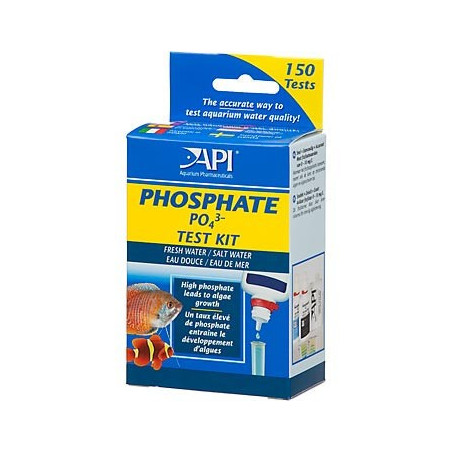


Phosphate can enter your aquarium through tap water, fish waste, and decaying organics such as uneaten food and dead algae. Excess phosphate contributes to unsightly algae blooms. This kit tests phosphate levels from 0 to 10 ppm in freshwater and saltwater aquariums
This test kit reads the total phosphate level in parts per million (ppm), which are equivalent to milligrams per liter (mg/L) from 0 - 10.0 ppm (mg/L).
Phosphate (PO43–) enters the aquarium from fish and invertebrate waste and decaying organic matter, such as dead algae and uneaten fish food. Water treatment facilities may add phosphate to tap water to prevent pipe corrosion and reduce concentrations of heavy metals in drinking water. Some salt mixes also contain phosphates. Excess phosphate may lead to algae blooms. In saltwater aquariums, phosphate precipitates dissolved calcium (Ca2+) and magnesium (Mg2+) ions, inhibiting the growth of hard corals and other reefbuilding organisms.
Directions:
Rinse a clean test tube with water being tested.
2. Fill the test tube with 5 ml of water to be tested (to the line on the tube).
3. Holding the bottle vertically, add 6 drops from Phosphate Test Solution Bottle #1. Cap the test tube and shake vigorously for 5 seconds.
4. Now, holding the bottle vertically, add 6 drops from Phosphate Test Solution Bottle #2. Note: Bottle #2 contains a very thick solution and may require increased pressure to release drops.
5. Cap and shake the test tube vigorously for 5 seconds.
6. Wait 3 minutes for color to develop.
7. Read the test results by comparing the color of the solution to the appropriate Phosphate Color Card (choose either Freshwater or Saltwater). The tube should be viewed in a well-lit area against the white area of the card. The closest match indicates the ppm (mg/L) of total phosphate (PO43–) in the water sample. Rinse the test tube with clean water after use.
What the Test Results Mean
Ideally, the phosphate level should be 0 in aquariums (and ponds). The phosphate level in a new aquarium will depend on the purity of the water used to fill the aquarium. The phosphate level in tap water can vary daily depending on the treatment process used. Phosphate tends to accumulate in established aquariums.
Reducing Phosphate Levels
To quickly reduce phosphate, perform a partial water change. Remove any dirt and uneaten fish food from the bottom of the aquarium and change 25-50% of the water, depending on the phosphate concentration. To be sure your water source does not contain phosphate, use filter pad phosphate pad.

Your review appreciation cannot be sent
Report comment
Report sent
Your report cannot be sent
Write your review
Review sent
Your review cannot be sent
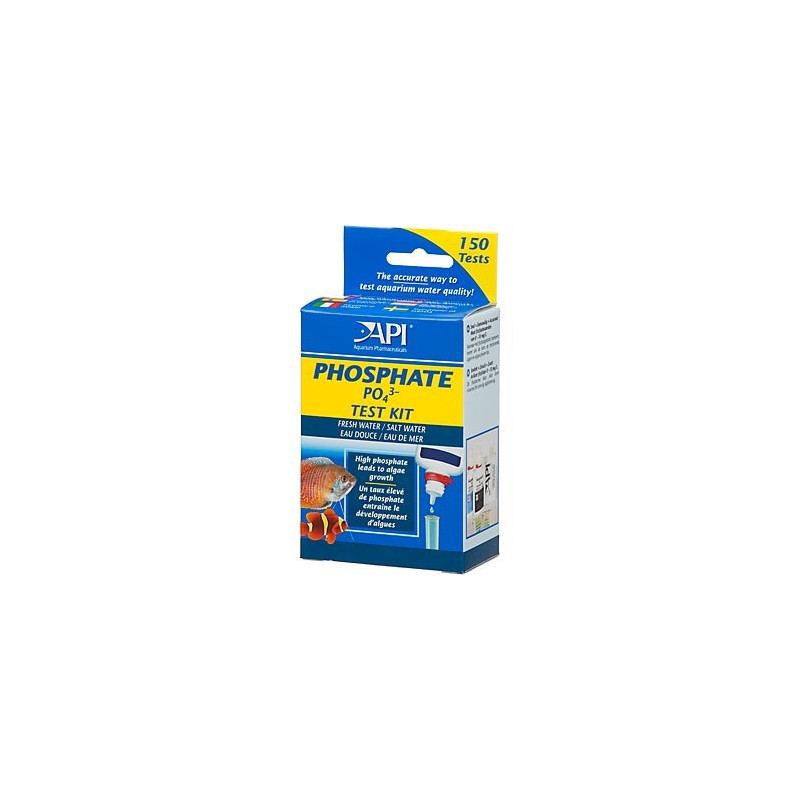
Phosphate can enter your aquarium through tap water, fish waste, and decaying organics such as uneaten food and dead algae. Excess phosphate contributes to unsightly algae blooms. This kit tests phosphate levels from 0 to 10 ppm in freshwater and saltwater aquariums